
Our adventures into this little corner of Amateur Radio!
How it all began…
One fine afternoon, when we were hanging out just talking, one of our members, Aaron (W8APS) brought up the idea of the club launching a Pico Balloon. Not knowing a lot about it, we jumped on the trusty old interwebs and started researching. In just a couple minutes we learned a few things:
- Pico Balloons generally use APRS or WSPR to send location, and other, data back to earth from an altitude of about 40,000 – 45,000 feet.
- They fly anywhere from a few hundred miles to looping the entire earth several times.
- They are built using very simple, everyday items, that you likely never recover.
- Solar is the way to go if you want to circumnavigate the globe.
- You can buy electronics kits ranging from about $20 per flight to well over $100 per flight.
- They weigh 15 – 30 grams if you want to stay in the “Pico” definition.
We discussed it and decided we wanted to first attempt to make our own design, from the ground up (pun intended), before just buying a kit. With that in mind, we all took off in our own directions.
The Housing Design
Aaron (W8APS) started in on the design and printing of the housing that would hold the electronics and solar panels. Once all the parts arrived and he measured everything, we ended up with this simple design:
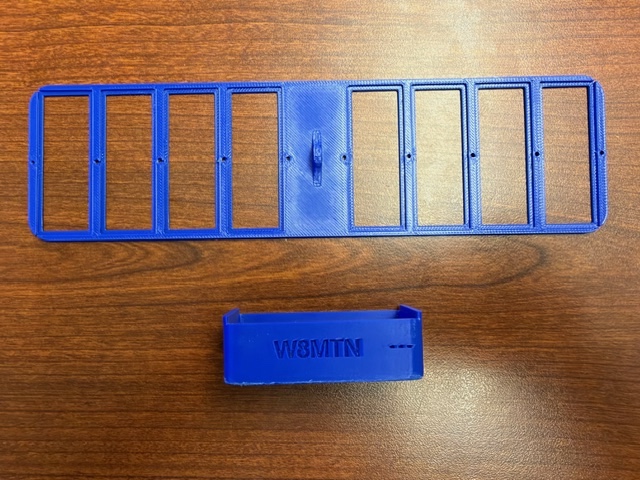
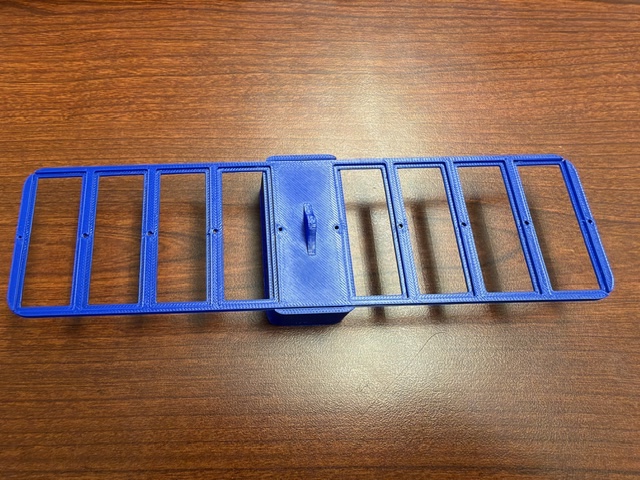
The Electronics
Sean (AE8SP) dug into the hardware and software design. He decided on three basic components:
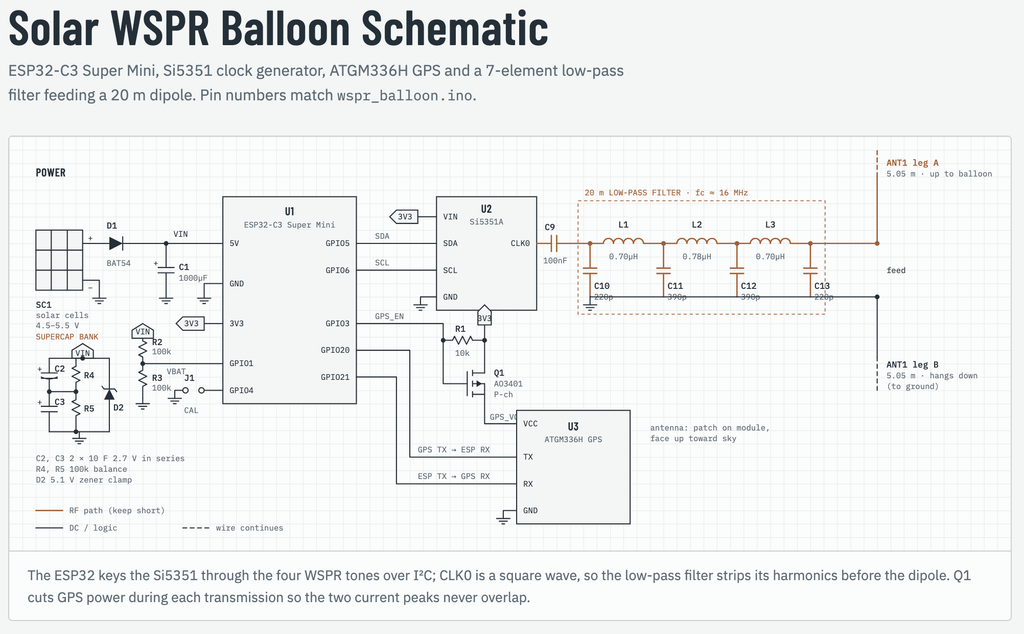
- An ESP32-C3 Super Mini microcontroller as the brain.
- A Si5351A Square Signal Generator for the 20m WSPR signal.
- A ATGM336H GPS board for position data.
After some less than stellar soldering, he was able to get a basic prototype built, and transmitting!
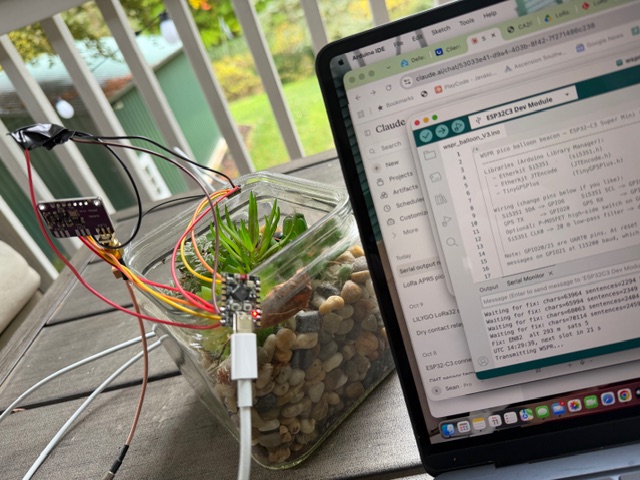
(Yes, Claude helped with the troubleshooting and some rewriting of the code.)
The program also uses the Traquito WSPR hack, to include additional data in the WSPR transmissions.
https://traquito.github.io/channelmap
The code continues to grow, as does the list of parts used (zener diodes, resistors, super capacitors).
Power
What a nightmare. The “recommended” solar panels come with a warning that they are super fragile… boy were they right! After breaking as many as I saved, I got a fully working solar panel array
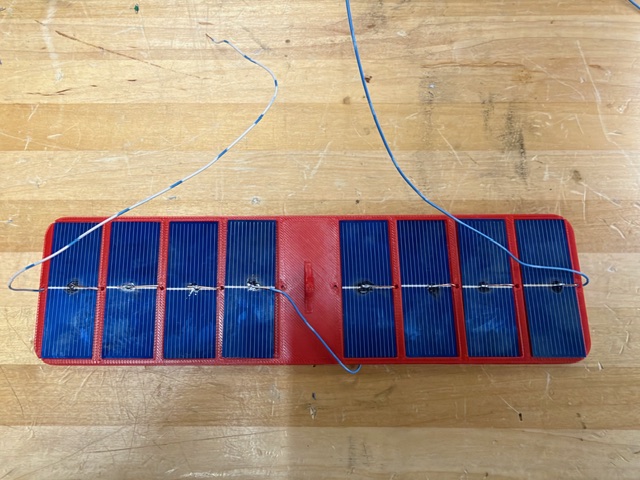
We have a couple other power options we are going to play with including 3 AAA batteries for a short flight and alternate “stronger” solar panels.
Lift
Now we have to get this thing into the air. We did some research and decided on some very reasonably priced 50″ silver mylar balloons from good ole’ Amazon and helium. We discussed hydrogen, and may eventually go that route, but for now helium is just easier.
…. To Be Continued…